
 istropolitan.sk
How It All Began
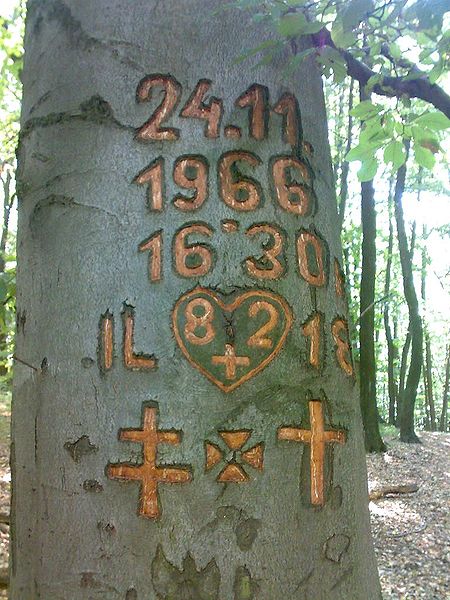
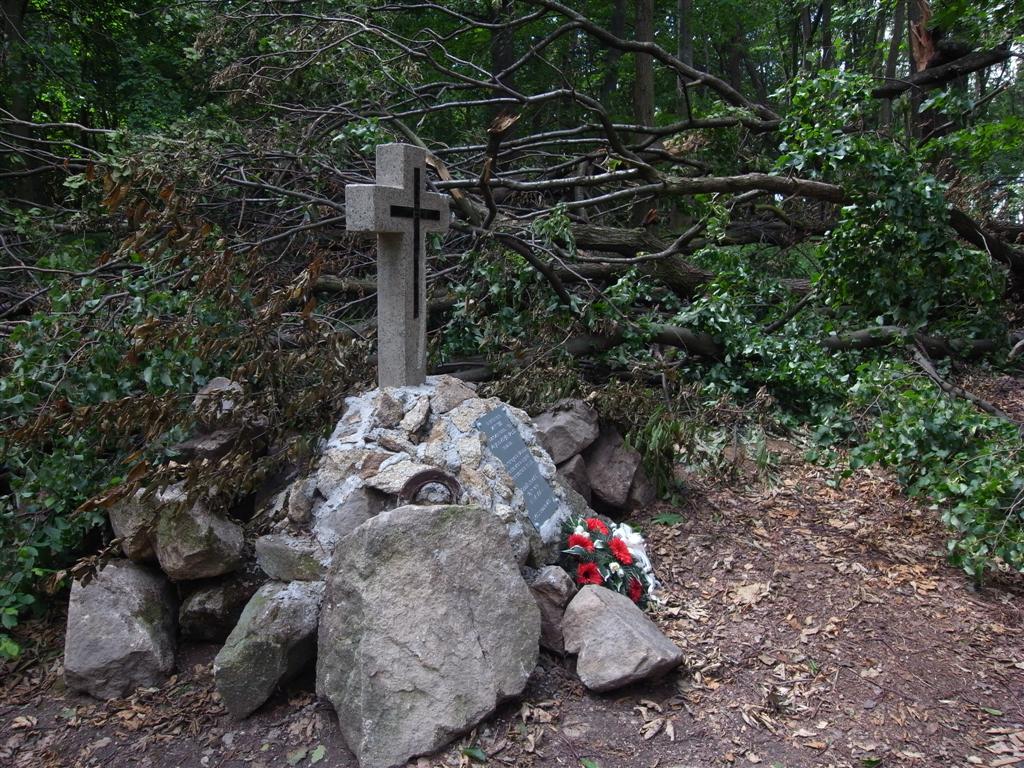
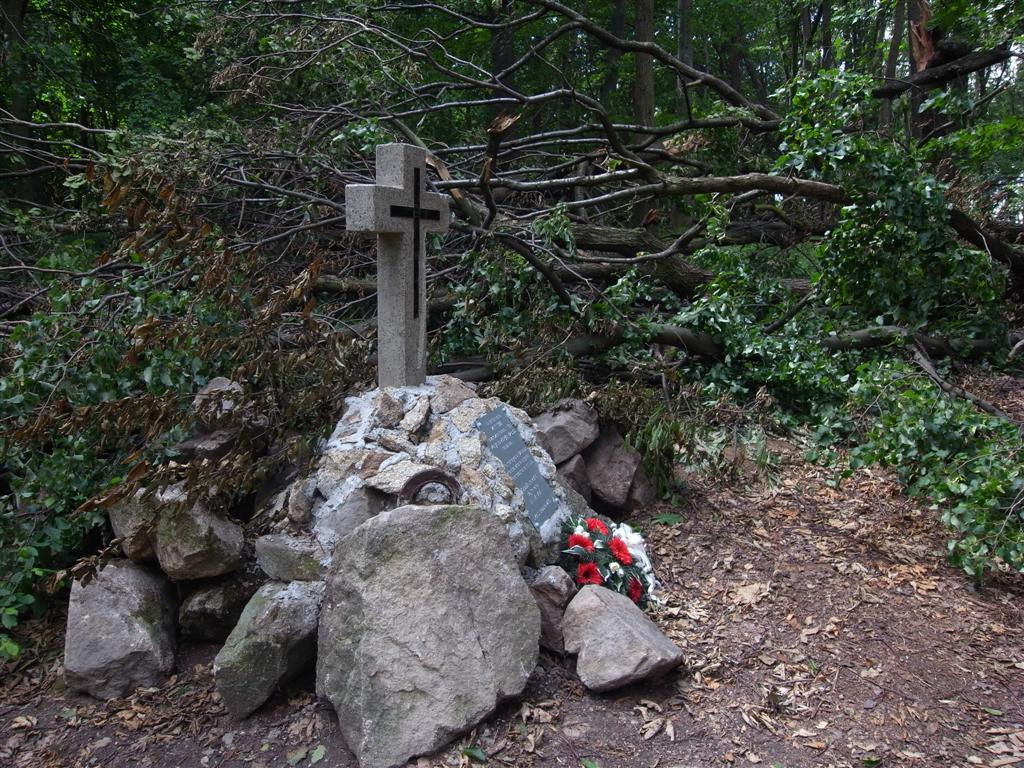
 Sometime in the middle of the “noughties” of the 21st century, the Katrlík brothers, lovers and connoisseurs of the Little Carpathians, came across the first information about the plane crash on Sakrakopec Hill in 1966. On a spring Saturday they organised a search expedition with the aim of finding this place. We hiked through the forest from Rača to Svätý Jur and asked everyone we met whether they knew the place. Nobody knew anything. But finally, after many hours of a beautiful forest hike, we managed to find the spot with a simple wooden cross and an inscription on a tree. Even then the idea arose of erecting a sturdier and more lasting small memorial here and of marking the place, because this greatest Czech-Slovak air disaster should not be forgotten. And that, presumably, is exactly how it was meant to remain according to the will of the rulers of that time – after all, not even the students who lived in the Mladá Garda student residence during the “thaw sixties”, only a few kilometres from Sakrakopec Hill, remember it, for example…
The Cross from Volica
 The idea of erecting a memorial, however, lived on. At first we had the idea of fashioning a cross from two beautiful birches that grew near the crash site. It is a good thing that this did not happen, because we later learned that each birch symbolises one victim (according to the director of the Sv. Jur municipal forests, Mr. Čičo, however, this version is a legend. In 2010 many birches were snapped in a storm).
At Easter 2010, by the Laborec near the village of Volica, I found a discarded, one-metre-high concrete cross on a rubbish dump. As I later learned in the local pub, it had been disposed of there when a grave was converted into a crypt (popular among the Rusyns). I knew at once that I had to take the cross with me and where it was to be erected. On Sakrakopec Hill!
 April 2010 became the month of preparations for the erection of the memorial. Our first concern was to find out who actually owned the site of the accident. When we found out that it belonged to Svätý Jur, we turned to the municipal organisation 1. svätojurská, which manages the forests of Svätý Jur, with a request for a building permit. It was issued to us by the obliging director, Mr. Matej Čico, who even drove us to the site of the accident. He only wondered why we wanted to do this at all…
Erection of the Memorial on 7 and 8 May 2010
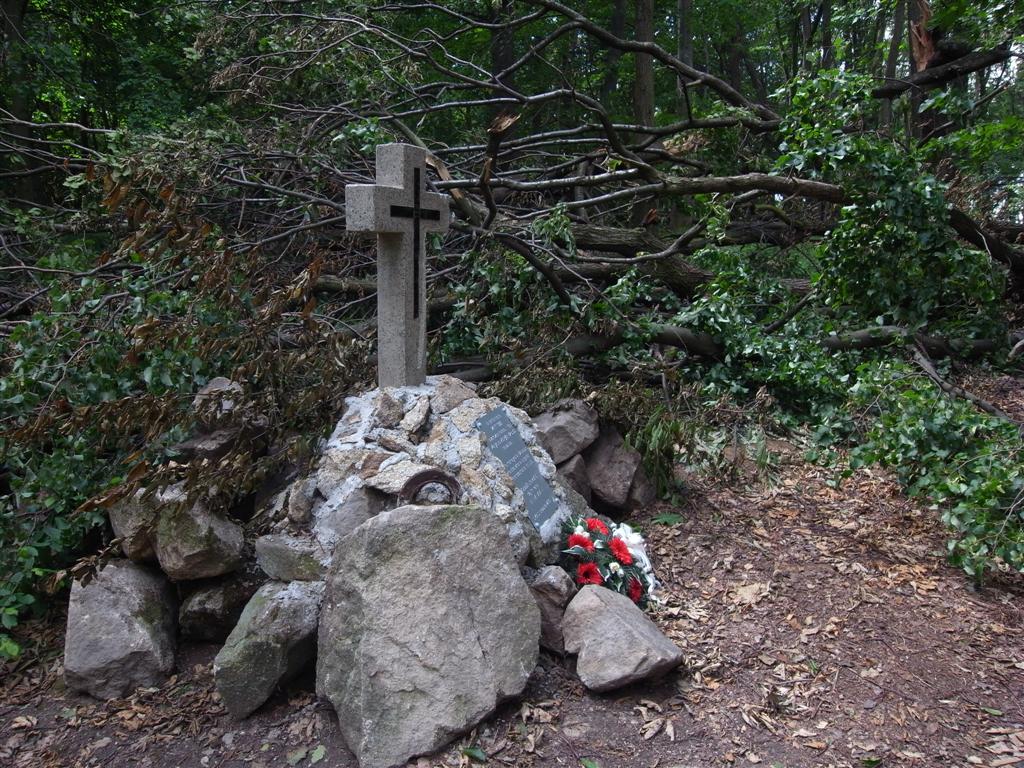
The concrete cross had to be adapted. We therefore had an iron anchor welded onto its underside at Ľudo Kováčik’s company M-profex. This company also made the information plaque that we attached to the memorial. At the same time as these preparations, we made contact with the Bulgarian community in Bratislava, led by Father Nikolaj Andonov, who was enthusiastic about our initiative. We approached several people who had something to say about this tragedy; on behalf of all of them I must mention at least Mr. Karol Hatvani, an air traffic controller and one of the last people to have spoken with the pilot of the ill-fated aircraft (we publish his testimony below). Via Melbourne (Hatvani), Sofia and Amsterdam we also made contact with a family of bereaved relatives, who then came to the solemn dedication and gave the entire undertaking a very strong human dimension.
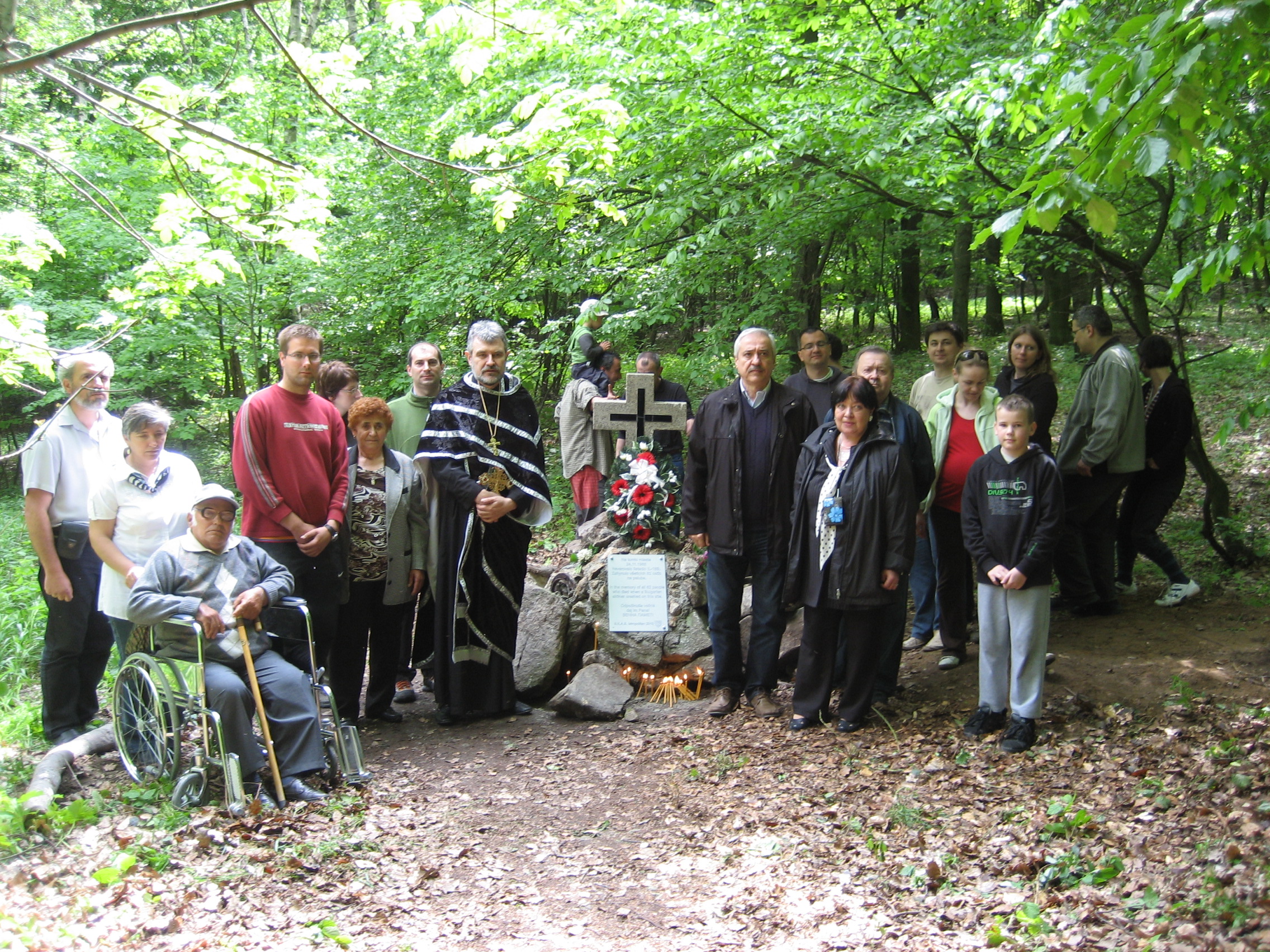
 We began building on the afternoon of Friday, 7.5.2010. We used the stones of a loosely piled cairn that stood on the spot. We dug a foundation about 1.5 m deep, piled up the cairn and set the cross and the plaque with the text into it. The entire memorial reaches a height of about 1.7 m and consumed around 15 sacks of dry concrete. The main builders were Wendy, Jano Komara, Ambro, Andrej Kubík, Heňo Béreš, Jaro Kočíšek (without his Land Rover we would not have managed anything) and others. Fifto documented the entire undertaking. On Saturday, 8.5., we completed the construction, mounted the plaque with the help of Mr. Brezáni, and around noon Father Andonov solemnly blessed the memorial. The Old Church Slavonic Our Father that resounded on the Sakrakopec gave the entire undertaking a powerful moment of transcendence. The goulash that we cooked at the Márova búda crowned the whole pleasant Saturday outing. With it came good Bulgarian wine and home-distilled brandy from our Bulgarian friends, as well as a large turnout of members and friends of Istropolitan…
Growing Interest in the Sakrakopec and Marking of the Trail
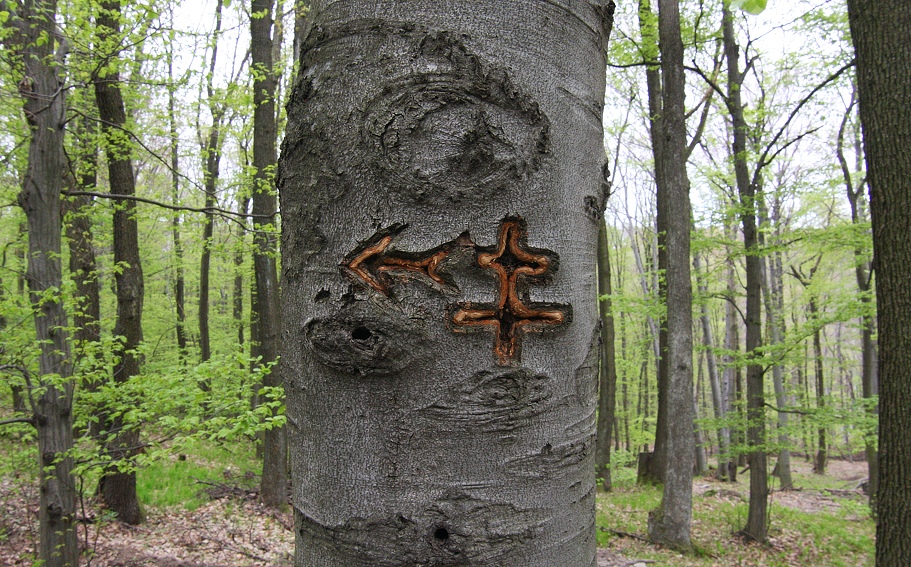
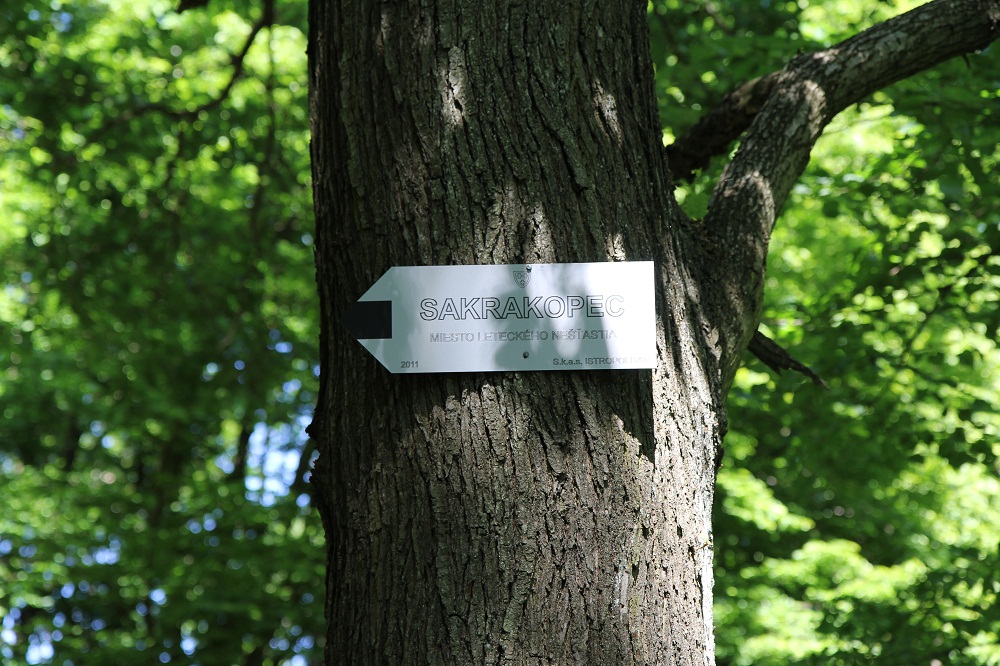
 After the erection of the memorial we noted increased public interest in this greatest air disaster in Slovak as well as Czech history. By way of example, we may mention the detailed report straight from the construction work in the newspaper SME by Dorota Kráková, a large article in TV OKO (SME) by Márius Kopcsay and several articles on Slovak and Czech websites. Slovak Television (STV) also covered the topic. The place, however, was still rather difficult to find, even though at the cosy Včelín buffet at Biely kríž (White Cross) one was always reliably shown the way there. The way to the Sakrakopec was indicated by several marks carved into the trees, which testify that this disaster never left many people indifferent. There are, however, only a few such marks along the way, and moreover they are gradually growing over. In 2011 we therefore decided to mark the access to the site of the accident with more reliable signposts. We chose black as the colour, also out of consideration for what happened here. It is probably the only black-marked hiking trail. The trail is marked both from the Vajnorská dolina and from Biely kríž. The signs were again made by Ľudo Kováčik’s company. Even map portals responded to this and recorded the Sakrakopec on their maps.
List of the Victims‘ Names
 At the beginning of 2012 I received an invitation to the Bulgarian embassy from the Chargée d’affaires of the Republic of Bulgaria, Mrs. Margarita Ganeva. At the meeting Mrs. Ganeva handed me a list of the victims of the accident, which came from Bulgarian archives. This became the basis for the search for further authentic documents that the Czechoslovak authorities had drawn up about the tragedy, since the Bulgarian document was accurate only for the victims of Bulgarian nationality.
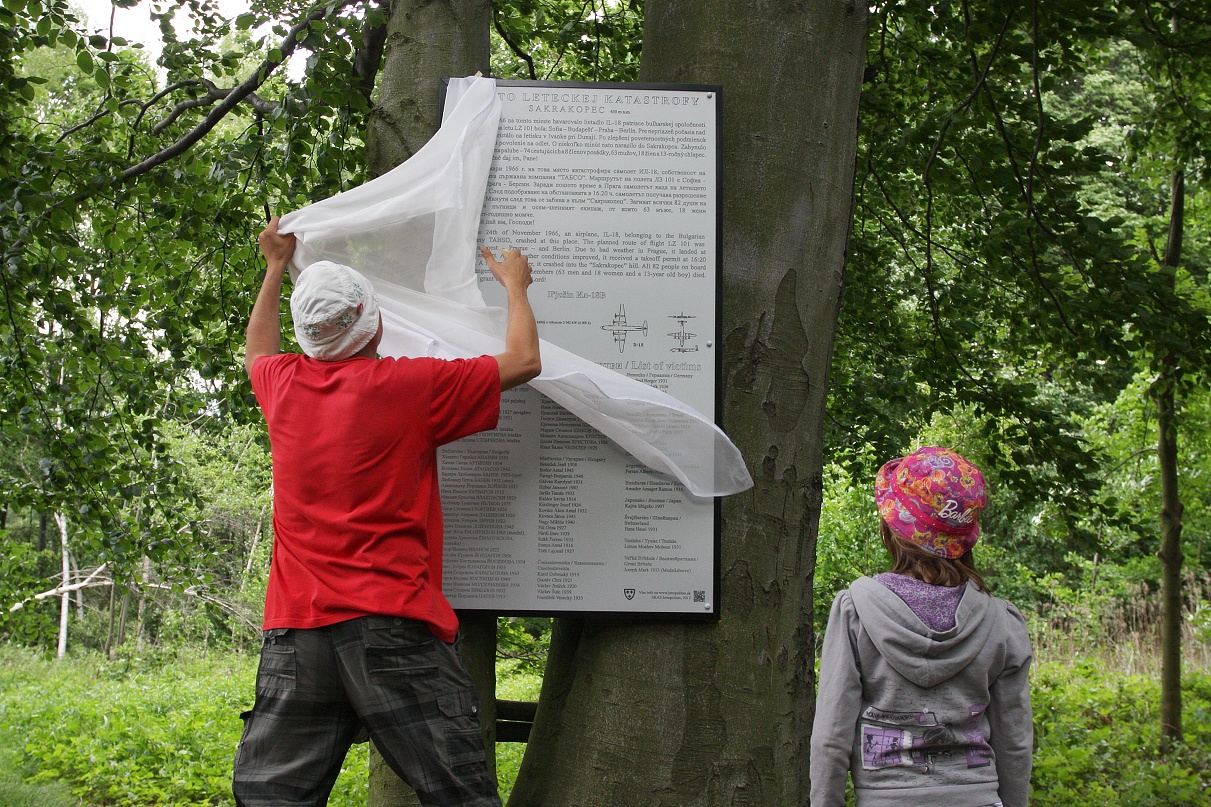
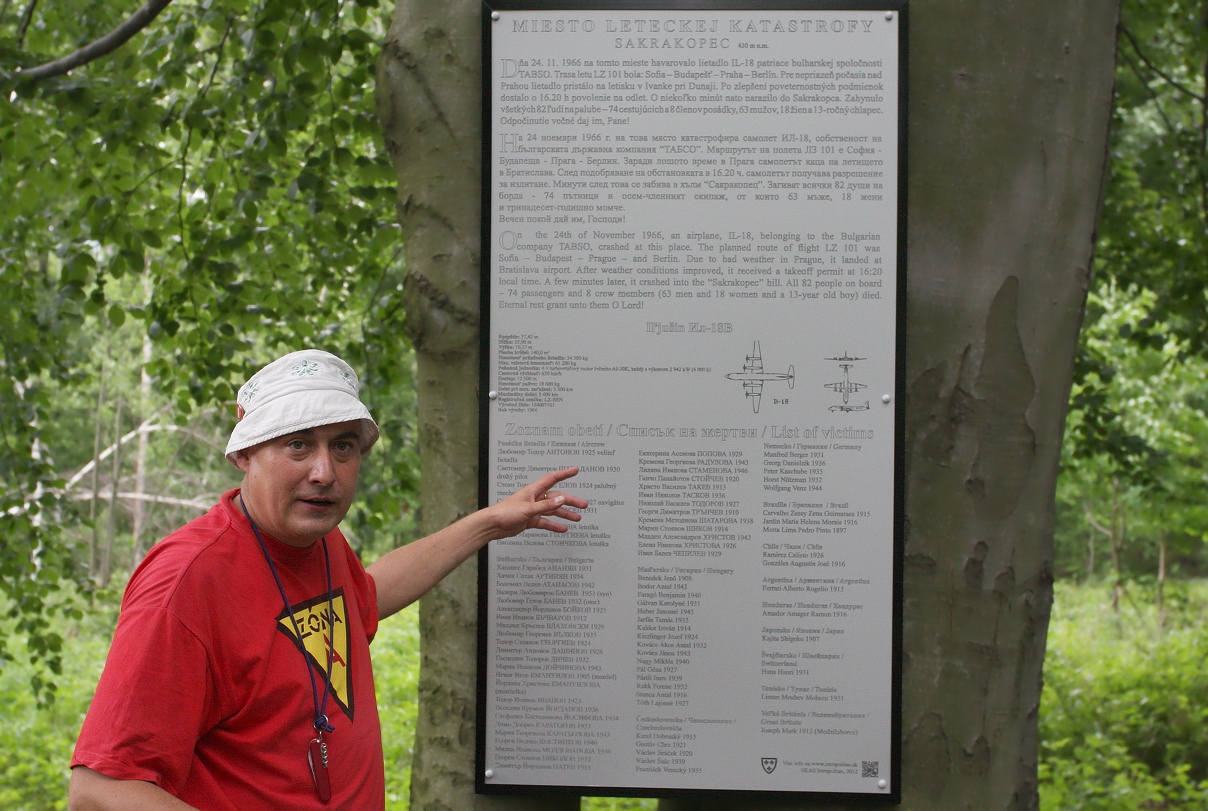
We therefore wrote e-mails to all state institutions in Slovakia and the Czech Republic that deal with aviation, as well as to numerous associations and organisations having anything at all to do with aviation, and asked for help in finding the list of victims of the 1966 accident. In them we explained our intention of installing an information plaque with these names at the site of the accident. 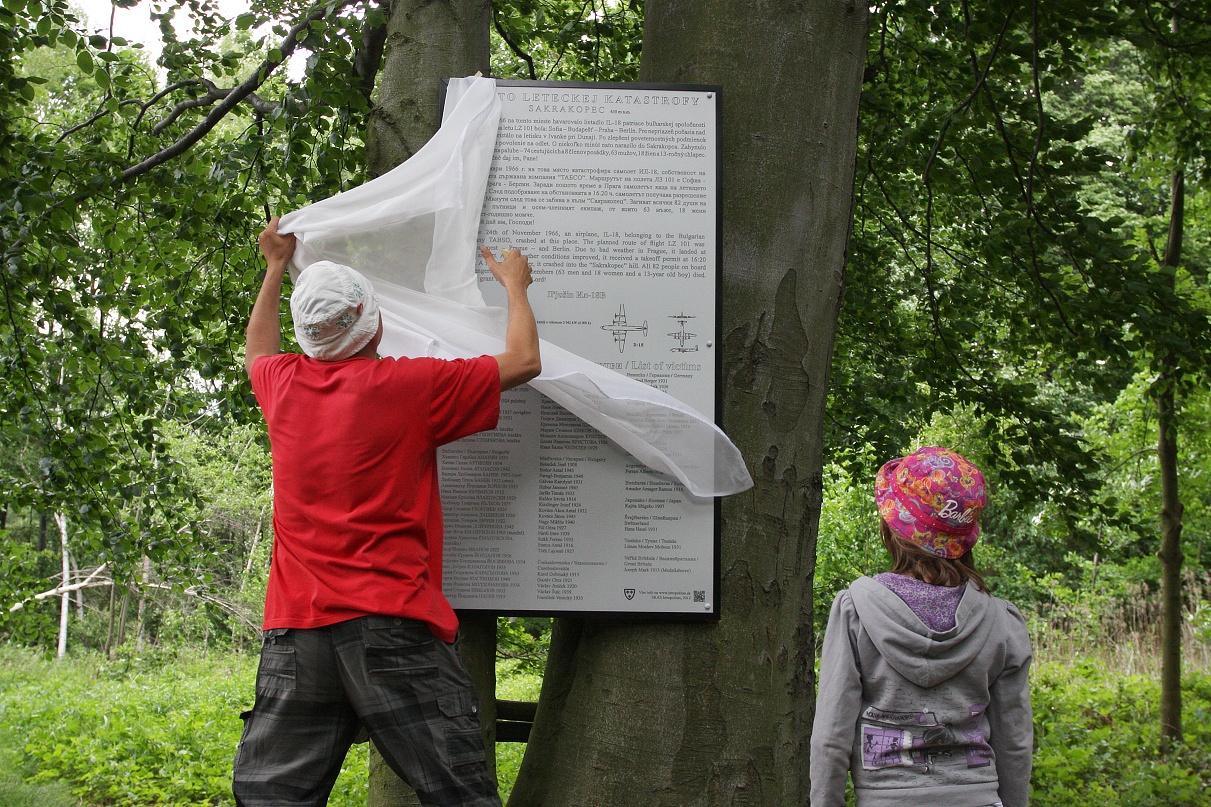 Replies – negative, but with encouragement for our search – came from almost all the non-governmental organisations we had written to. Not a single official Slovak authority replied to us, although the then Minister of Transport Ján Figeľ responded to our request in the best Euro-newspeak manner: “I would like to help, but that is not easy in a short time. They might know more about it at the Ministry of the Interior, but we will consult. JF”. Fortunately, the state authorities in the Czech Republic forwarded our request to the right places, and on 6.3.2012 we received from the National Archives of the Czech Republic three further name lists of the passengers of the fateful flight of the TABSO company. By comparing the individual documents, supplementing them with one another and combining them, we managed to compile what is probably the most complete and accurate list currently available. In compiling it we were helped by Zuzana Piptová from Sofia with the Bulgarian and with her kind commitment to the whole undertaking, Diana Maroszová with the Hungarian, and Masahiko Shiraki with the correct determination of the name of the Japanese citizen. The information plaque was prepared by Wendy, Ambro and Paťo and made by Ľudo Kováčik. On Saturday, 12.5.2012, we erected it (150 cm x 80 cm) at the site of the tragedy.
Installation of a Bench (2013) and Renovation of the Old Cross (2014)
In 2013 we installed a hiking bench on the Sakrakopec, which is becoming a fairly frequently visited place. It served us as an altar table at which our friend, the Dean of the Faculty of Theology of the University of Trnava (TU), ThLic. Miloš Lichner SJ, celebrated Holy Mass for the victims of the accident.
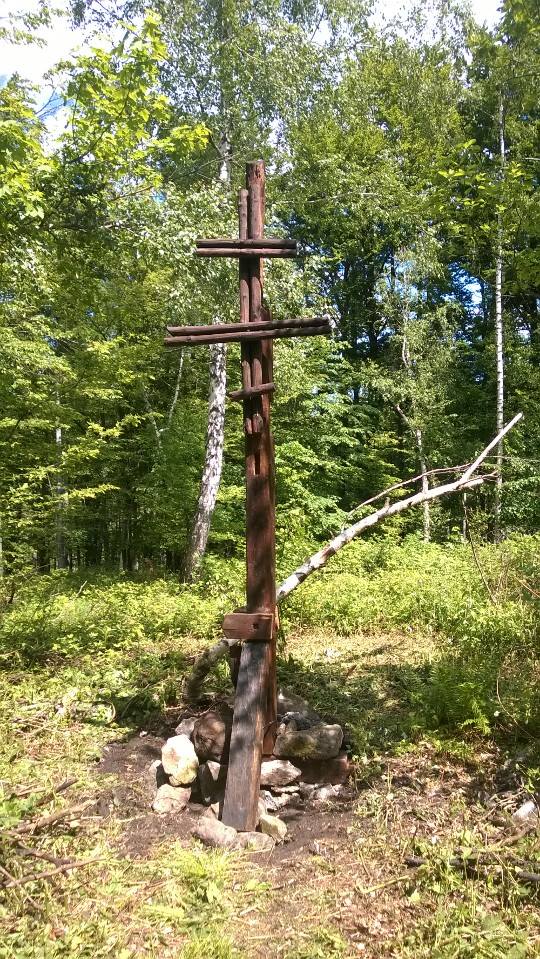 In 2014 we renovated the original wooden cross, which, neglected, was lying rather than standing in the forest undergrowth. We conserved the cross, and it received a new stand à la Vladimír Kompánek, for which we used ancient roof beams from Bratislava’s Old Town. We cleared the immediate surroundings of raspberry canes and tall grass with a brush cutter.
The composition memorial – plaque – wooden cross is slowly but surely approaching what our initiatives on the Sakrakopec are aiming at – the creation of a dignified place of remembrance in the nature of the Carpathians.
On the donation portal Ľudiaľuďom we have published an appeal for financial support of our activities on the Sakrakopec. We are grateful for any help.
We sincerely thank all the individuals and organisations involved who have helped us in any way!
For the Slovak Catholic Academic Fraternity (SKAS) ISTROPOLITAN
Plepo
May 2014
List of victims / List of victims / Списък на жертви
Bulgaria / Bulgaria / България

Ханес Гарабед АНАНЯН 1931
Хачик Сахак АРТИНЯН 1934
Богомил Велев АТАНАСОВ 1942
Валери Любомиров БАНЕВ 1953 (son)
Любомир Гетов БАНЕВ 1932 (father)
Александър Йорданов БОЙКОВ 1925
Иван Иванов БЪЧВАРОВ 1912
Михаил Кръстев ВЛАХОВСКИ 1929
Любомир Георгиев ВЪЛКОВ 1935
Тодор Стоянов ГЕОРГИЕВ 1924*
Димитър Андонов ДАШИНОВ 1926
Господин Тодоров ДИЧЕВ 1922
Мария Иванова ДОЙЧИНОВА 1943
Игнат Игов ЕМАНУИЛОВ 1905 (husband)
Йордана Христова ЕМАНУИЛОВА (wife)
Тодор Иванов ИВАНОВ 1923
Веселин Крумов ЙОРДАНОВ 1936*
Стефанка Костадинова ЙОСИФОВА 1934
Димо Добрев КАРАГОГОВ 1933
Мария Георгиева КАРАГЬОЗОВА 1943
Георги Вълчев КОСТИНКОВ 1940
Милка Иванова МОЛДОВАНОВА 1936
Георги Стоянов НИКОЛОВ 1932
Димитър Йорданов ПАТЕВ 1915
Екатерина Асенова ПОПОВА 1929
Кремена Георгиева РАДУЛОВА 1943
Лиляна Иванова СТАМЕНОВА 1946
Ганчо Панайотов СТОЙЧЕВ 1920
Христо Василев ТАКЕВ 1913
Иван Николов ТАСКОВ 1936
Николай Василев ТОДОРОВ 1927
Георги Димитров ТРЪНЧЕВ 1910*
Кремена Методиева ШАТАРОВА 1938
Марин Стоянов ШИКОВ 1914
Младен Александров ХРИСТОВ 1942
Елена Иванова ХРИСТОВА 1926*
Иван Балев ЧЕПИЛЕВ 1929
Aircrew / Aircrew / Екипаж
Любомир Тодор АНТОНОВ 1925 Captain
Светомир Димитров ШАКАДАНОВ 1930 Co-pilot
Стоян Тодоров РАНГЕЛОВ 1924 Flight engineer
Слави Стефанов ТОМАКОВ 1927 Navigator
Никола Александров ТАСЕВ 1931 Radio operator
Мария Иванова ИВАНОВА Stewardess
Светла Маринова ГЕОРГИЕВА Stewardess
Виолина Велева СТОИЧКОВА Stewardess
Hungary / Hungary / Унгария
Benedek Jenö 1908
Bodor Antal 1943
Faragó Benjamin 1940
Gálvan Karolyné 1931
Huber Janosné 1945
Jarfás Tamás 1933
Kaldor István 1914
Kiszlinger Jozef 1924
Kovács Ákos Antal 1932
Kovács János 1943
Nagy Miklós 1940
Pál Géza 1927
Pártli Imre 1939
Rakk Ferenc 1932
Stanca Antal 1916
Tóth Lajosné 1927
Czechoslovakia / Czechoslovakia / Чехословакия
Karel Dobruský 1915
Gustáv Chrz 1921
Václav Jiráček 1920
Václav Šulc 1939
František Vesecký 1935
Germany / Germany / Германия
Manfred Berger 1931
Georg Danielzik 1936
Peter Kaschube 1935
Horst Nützman 1932
Wolfgang Venz 1944
Brazil / Brazil / Бразилия
Carvalho Zessy Zena Guimaraes 1915
Jardin Maria Helena Morais 1916
Motta Lima Pedro Pinto 1897
Chile / Chile / Чили
Ramirez Calisto 1926
Gonzáles Augustín José 1916
Argentina / Argentina / Аржентина
Ferrari Alberto Rogelio 1913
Honduras / Honduras / Хондурас
Amador Amager Ramon 1916
Japan / Japan/ Япония
Kajita Shigeko 1907
Switzerland / Switzerland / Швейцария
Hans Hauri 1931
Tunisia / Tunisia / Тунис
Liman Moshev Mohsen 1931
Great Britain / Great Britain / Великобритания
Joseph Mark 1913 (Medzilaborce)
* The mark next to a name means that the person was registered with the secret services of Bulgaria.
The Testimony of Karol Hatvani
 In the years 1961–68 I worked as an air traffic controller responsible for civil air traffic over the territory of Slovakia. At the airfield in Vajnory I taught powered flying. In my spare time I drew up plans for the construction of a radar station above Rača on Malý Javorník (which was indeed built about 10 years later). I can provide the relevant evidence on request.
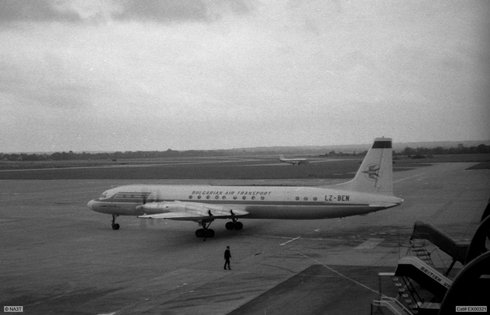
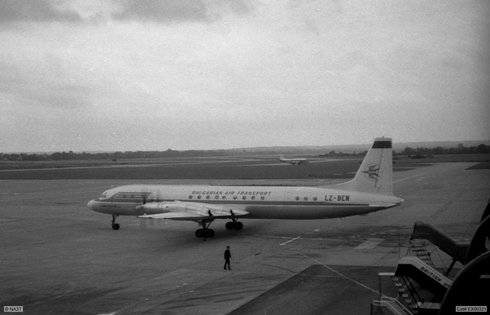
On the day of the crash of the Bulgarian IL-18 aircraft I was on the early shift, which ended at 13:00. Two aircraft were flying from Hungary towards Bohemia on the route Štúrovo – Nitra – Brno. The first was a Tu-104 of Czechoslovak Airlines (ČSA), and close behind it the Bulgarian Il-18. The Tu-104 was flying at an altitude of about 10,000 metres, the Il-18 at about 8000 m. Both flights proceeded completely normally, and after passing over Brno both signed off by radio and established contact with Prague. A few minutes later Prague telephoned to say that, because of fog in Prague, both aircraft had decided to land in Bratislava. A few minutes later both aircraft also called in and asked for instructions. The instructions were standard: for the ČSA aircraft, to fly from Brno via Břeclav to Bratislava; for the Bulgarian aircraft, to fly from Brno towards Zemianske Kostoľany and from there to Bratislava (foreign aircraft were not permitted to overfly the military restricted area around Malacky). After passing over Brno, the ČSA aircraft was a few kilometres ahead of the Bulgarian aircraft; it was cleared to descend and was to contact Bratislava-Ivanka airport for landing instructions after passing over Břeclav. The Bulgarian aircraft was also cleared to descend, and it too was to contact Bratislava-Ivanka airport.
 A couple of minutes later the airport tower called me and asked where the Bulgarian aircraft was. I replied that by my estimate it was between Hodonín and Zemianske Kostoľany (our radar was out of service at that moment). A couple of minutes later, however, the tower called me to say that they had detected the Bulgarian on their radar and that he was behind the ČSA aircraft over Malacky. In air traffic control in Slovakia at that time the situation was such that violations of rules, orders and instructions, defective transmitters, receivers, radar equipment, etc. were ignored. Nothing was reported, no consequences were drawn; it was simply as if nothing had happened. And so it was in this case of a gross violation of the instructions, too.
When I finished my shift at 13:00, I met the captain of the Bulgarian aircraft in the corridor. I asked him why they had not flown via Zemianske Kostoľany. The answer was that they had been behind the ČSA aircraft the whole time, the weather had been good, they had supposedly seen the aircraft ahead of them all the time – and was that a problem? Well, knowing the situation, I shrugged my shoulders and went home.
At that time I lived in Rača, about 5 km as the crow flies from Ivanka airport. In the late afternoon I was outside in front of the house and heard the Tu-104 taking off. Shortly afterwards I also saw it; it was flying from Ivanka towards Malý Javorník and, over the line Rača – Svätý Jur, was at least 1000 metres above the ground. It was brightly lit by the setting sun. I also noticed that the Little Carpathians were wearing a cloud “hat” about 100 metres thick, which began roughly at the line of the vineyards. I went into the house and immediately afterwards heard the engines of the Il-18. That’s the Bulgarian, I thought to myself. I knew that he had instructions to turn after take-off towards Zemianske Kostoľany and from there to Brno. I heard the engines for perhaps one or two minutes, then they fell silent. Immediately afterwards I heard the children in front of the house shouting: “A plane has crashed!” I ran out and saw above the cloud “hat” a greyish cloud of rising smoke. In an instant I knew what had happened. I ran to the nearby factory (about 100 metres away), from where I called the tower and reported what I had seen. I learned that they could neither see the “Bulgarian” on the radar nor was he answering them. In my house clothes I ran off to the site of the tragedy, about 3 km away. When I arrived there after about 25 minutes, it was already almost completely dark, and the first snow of that winter was beginning to fall. I saw snapped trees, wreckage of the aircraft everywhere, parts of human bodies, scattered luggage, and fires in between; I saw that any help came too late. I ran back to the telephone and reported to the tower in Ivanka what I had seen. What had led to the tragedy was completely clear to me then, and still is today: the captain of the Bulgarian aircraft, seeing that nothing had happened to him because of the gross violation of the instructions during the flight to Bratislava, decided to fly in the same direction, i.e. towards Břeclav and Brno. Perhaps he again saw the ČSA aircraft ahead of him, as on the flight to Bratislava….
As I have described it here, I was part of this whole tragedy. Officially, however, I was never questioned, no one ever asked me anything, and – given the atmosphere at that time – that suited me. I might have said something that did not fit the official version, and my career would have been over.
Note: For a better understanding of the situation, I recommend having a map at hand.
Charles Karol Hatvani,
Note: Mr. Hatvani emigrated to Australia in 1968 and lives in Melbourne. P